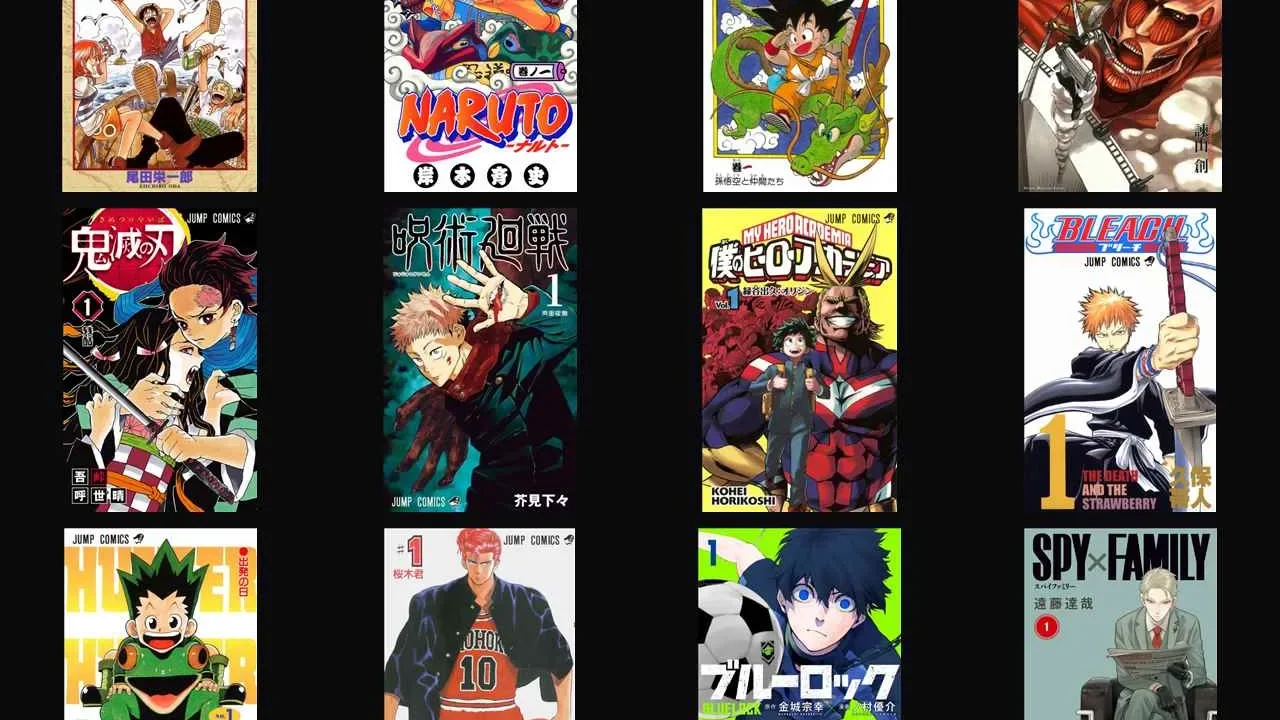
Build your personal hierarchy of these Japanese shonen manga, judging the manga rather than their anime adaptations. Consider story arcs, character growth, panel composition, pacing, and emotional payoff. Decide whether you value consistent quality or unforgettable peaks, and apply that standard across action, sports, comedy, and romance. Leave unread series aside instead of judging them by reputation alone.
-
1
One Piece
Eiichiro Oda’s Weekly Shonen Jump pirate adventure follows Monkey D. Luffy and his crew in search of the One Piece treasure. Its island journeys, distinctive crew members, and inventive battles make it a representative choice for ranking expansive worlds and ensemble adventure.
Official source
-
2
Naruto
Masashi Kishimoto’s Weekly Shonen Jump series follows Naruto Uzumaki, a young ninja seeking recognition and the position of Hokage. Its training, team missions, and rivalries make it representative of character-driven battle manga, offering clear comparison points for tactical fights and personal growth.
Official source
-
3
Dragon Ball
Akira Toriyama’s Weekly Shonen Jump manga follows Goku through magical treasure hunts, martial arts training, and increasingly formidable battles. Its blend of visual comedy and tournament competition makes it a representative benchmark for comparing fight choreography, adventure pacing, and escalating power levels.
Official source
-
4
Attack on Titan
Hajime Isayama’s Bessatsu Shonen Magazine series depicts humanity sheltering behind enormous walls from human-eating Titans, while Eren longs to explore outside. Its combination of survival horror and questions about the enclosed world makes it representative of darker shonen storytelling, emphasizing suspense over comedy.
Official source
-
5
Demon Slayer: Kimetsu no Yaiba
Published in Weekly Shonen Jump, Koyoharu Gotouge’s series follows Tanjiro Kamado through Taisho-era Japan as he seeks to restore his demon-transformed sister’s humanity. Its sibling-centered quest gives supernatural combat a clear emotional anchor, making family bonds a useful comparison point when ranking battle manga.
Official source
-
6
Jujutsu Kaisen
Gege Akutami’s Weekly Shonen Jump series places Yuji Itadori among sorcerers who protect humans from cursed spirits. Its combination of a specialized school, supernatural threats, and horror imagery makes it a useful benchmark for ranking the darker side of ensemble battle manga.
Official source
-
7
My Hero Academia
Kohei Horikoshi’s Weekly Shonen Jump series imagines a society where superpowers called Quirks make professional heroism a career requiring training. Its hero academy setting combines classroom relationships with superhero responsibilities, offering a distinct comparison point for readers ranking school-based action and aspirational protagonists.
Official source
-
8
Bleach
Tite Kubo’s Weekly Shonen Jump series follows ghost-seeing teenager Ichigo Kurosaki as he takes on Soul Reaper duties, protecting people from Hollows and helping spirits find peace. That dual responsibility makes it a distinctive benchmark for supernatural action built around guardianship and the afterlife.
Official source
-
9
Hunter x Hunter
Yoshihiro Togashi’s Shonen Jump adventure follows Gon as he seeks a Hunter license and searches for his father. Its demanding qualification trials and varied specialist pursuits make it representative of quest-driven shonen, with resourcefulness and personal motivations providing useful ranking criteria alongside combat.
Official source
-
10
Death Note
Written by Tsugumi Ohba and illustrated by Takeshi Obata, this Shonen Jump thriller centers on Light Yagami’s discovery of a notebook that kills. Its supernatural premise turns questions of justice into psychological conflict, offering a distinctive alternative to physically focused shonen action.
Official source
-
11
Haikyu!!
Haruichi Furudate’s Weekly Shonen Jump volleyball manga follows Shoyo Hinata, a short player inspired by the Little Giant. His ambitions and rivalry with gifted setter Tobio Kageyama ground its sports storytelling, making athletic limitations, competitive drive, and character chemistry useful points of comparison.
Official source
-
12
Fullmetal Alchemist
Hiromu Arakawa’s Monthly Shonen Gangan fantasy follows brothers Edward and Alphonse Elric as they seek to restore their bodies through alchemy. Its central bond and the consequences of forbidden experimentation make it representative of adventure manga that ties extraordinary abilities to personal responsibility.
Official source
-
13
Chainsaw Man
Originating in Weekly Shonen Jump, Tatsuki Fujimoto’s Chainsaw Man follows Denji, a struggling devil hunter partnered with the chainsaw devil Pochita. Its collision of monstrous action and basic everyday desires offers a distinctive contrast to stories built around heroic ambition.
Official source
-
14
Tokyo Revengers
Serialized in Weekly Shonen Magazine, Ken Wakui’s Tokyo Revengers combines delinquent gang drama with Takemichi’s ability to revisit his middle school years. Its effort to change the future through personal relationships gives the familiar youth fighting story a distinctive suspense framework.
Official source
-
15
Spy x Family
Published on Shonen Jump+, Tatsuya Endo’s Spy x Family assembles a pretend household comprising a spy, an assassin, and a telepath. That combination makes domestic misunderstandings central to its action comedy, offering a useful contrast to battle-focused series in this selection.
Official source
-
16
Blue Lock
Published in Weekly Shonen Magazine, Blue Lock gathers 300 young football players into a program designed to produce a decisive striker. Its emphasis on scoring ambition and competition among potential teammates offers a pointed contrast to sports manga centered on collective harmony.
Official source
-
17
Dandadan
Yukinobu Tatsu’s Shonen Jump+ series pairs Momo, who believes in ghosts, with Okarun, who believes in aliens, as their convictions meet paranormal encounters. Its mix of supernatural action, romantic comedy, and extraterrestrial absurdity provides a distinctive genre blend to weigh against conventional battle manga.
Official source
-
18
Kaiju No. 8
Naoya Matsumoto’s Shonen Jump+ series follows Kafka Hibino, a monster cleanup worker whose ambition to join the Japan Defense Force collides with his own kaiju transformation. Its adult protagonist and monster disposal premise offer a concrete contrast to school-centered shonen adventures.
Official source
-
19
Sakamoto Days
Yuto Suzuki’s Weekly Shonen Jump series centers on Taro Sakamoto, a retired assassin who now runs a neighborhood store and cares for his family. The contrast between domestic comedy and threats from his former profession gives its action a distinctive everyday setting.
Official source
-
20
Kagurabachi
Takeru Hokazono’s Weekly Shonen Jump series follows Chihiro Rokuhira, a swordsmith’s son who wields an enchanted blade while seeking stolen swords. Its focus on magical weapons and a craftsman’s legacy makes sword-centered action, rather than school life or sport, the central comparison point.
Official source
-
21
Slam Dunk
Takehiko Inoue’s Weekly Shonen Jump basketball manga follows novice Hanamichi Sakuragi as he joins Shohoku High’s team. Its emphasis on learning the sport, clashing personalities, and shared competitive goals makes it a representative choice for ranking character growth alongside team dynamics.
Official source
-
22
Gintama
Hideaki Sorachi’s Weekly Shonen Jump series follows Gintoki Sakata, a former samurai taking odd jobs in an alien-dominated Japan. That collision of historical imagery, science fiction, and irreverent comedy makes it a distinctive comparison point against the magazine’s more straightforward action adventures.
Official source
-
23
Kuroko's Basketball
Tadatoshi Fujimaki’s Weekly Shonen Jump basketball series pairs the unobtrusive Tetsuya Kuroko with Taiga Kagami at Seirin High. Kuroko’s emphasis on misdirection and supporting teammates offers a distinctive sports protagonist, making teamwork versus exceptional individual ability a useful basis for comparison.
Official source
-
24
Fairy Tail
Hiro Mashima’s Weekly Shonen Magazine fantasy manga follows aspiring wizard Lucy and her encounters with Natsu and the Fairy Tail guild. Its guild-centered structure gives magical adventures a shared social home, making the balance of ensemble camaraderie and action a useful ranking criterion.
Official source
-
25
The Seven Deadly Sins
Nakaba Suzuki’s Weekly Shonen Magazine fantasy follows Princess Elizabeth as she searches for a band of accused knights, including the seemingly unassuming Meliodas. Its combination of a kingdom-spanning quest, an ensemble of warriors, and magical combat represents the magazine’s adventure-focused side.
Official source
-
26
Fire Force
Atsushi Ohkubo’s Weekly Shonen Magazine series places Shinra, a recruit with flame-powered feet, in a specialist firefighting unit confronting spontaneous human combustion. Its distinctive mix of emergency response, supernatural battles, and an unfolding investigation offers a different framework for team-based shonen action.
Official source
-
27
Hajime no Ippo
George Morikawa’s Weekly Shonen Magazine boxing manga follows bullied student Ippo Makunouchi into the Kamogawa gym after meeting boxer Mamoru Takamura. Its emphasis on demanding training and the personal meaning of strength makes it a clear example of the magazine’s sports storytelling.
Official source
-
28
Ace of the Diamond
Yuji Terajima’s Weekly Shonen Magazine baseball manga follows Eijun Sawamura as a scouting opportunity brings him to Seido High School. His developing pitcher–catcher partnership with Miyuki gives the series a concrete team-sport focus, emphasizing how individual ambition depends on cooperation on the field.
Official source
-
29
The Quintessential Quintuplets
Negi Haruba’s Weekly Shonen Magazine romantic comedy follows Futaro, a cash-strapped student tutoring five sisters who dislike studying. Its shared tutoring setup and contrasting quintuplet personalities make it a useful representative of ensemble school romance, rather than battle-driven shonen storytelling.
Official source
-
30
Rent-a-Girlfriend
Reiji Miyajima’s Weekly Shonen Magazine romantic comedy follows college student Kazuya, who hires Chizuru as a rental girlfriend after a breakup. The collision between paid companionship, private feelings, and overlapping social lives distinguishes its relationship-driven approach from school-club romances and action-focused shonen.
Official source